External Reserves See First Decline in Two Months Amidst Naira Weakness
Nigeria’s external reserves have broken a two-month streak of consistent growth, a period that saw the reserves surpass the significant $45 billion mark in December. This recent downturn signals a shift in the economic landscape, prompting closer examination of the factors influencing these crucial financial buffers.
The initial dip in the reserves was observed on December 15th, when the total stood at $45.32 billion, a slight decrease from the $45.47 billion recorded prior. This downward trend continued, with the reserves falling further to $45.27 billion. By December 17th, a day-on-day decline of $57.05 million was registered, bringing the total to $45.21 billion. This contraction has consequently moderated the year-to-date gain to +10.60 percent, as reported by AIICO Capital. The preceding decline in external reserves was noted on October 8th, when they had fallen to $42.56 billion.
A Look Back at Reserve Growth:
The preceding three months had painted a picture of steady accumulation for Nigeria’s external reserves. Data from the Central Bank of Nigeria’s website reveals a consistent upward trajectory:
- September: Reserves closed the month at $42.35 billion.
- October 2025: A notable increase pushed the reserves to $43.19 billion.
- November 28th: The reserves had climbed to $44.69 billion.
- December 4th, 2025: A gain of $74.93 million propelled the reserves across the $45 billion threshold, reaching $45.04 billion.
This period of growth had provided a sense of economic stability, making the recent decline a point of concern for market observers and policymakers alike.
Naira Faces Persistent Pressure Against the Dollar
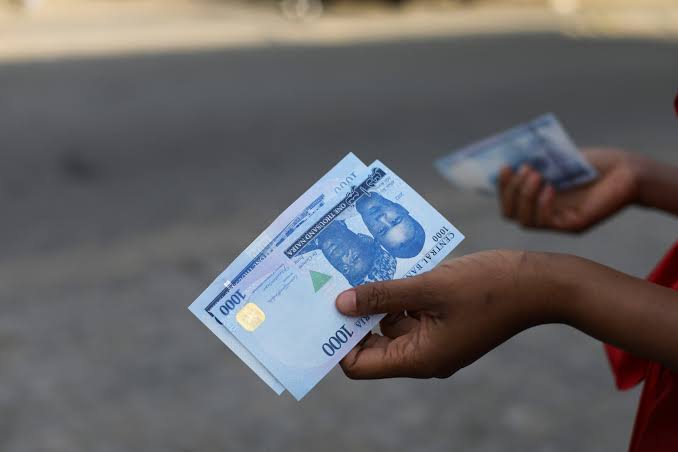
Compounding the concern over declining reserves is the continued depreciation of the Nigerian naira. In the span of just one week, the naira weakened by N10 against the US dollar, settling at N1,464.50 per dollar as of Friday. This depreciation is largely attributed to sustained demand pressure within the official foreign exchange window.
The situation is mirrored in the parallel market, where the naira traded at N1,510.00 per dollar on the same Friday, according to data from CardinalStone. This divergence between the official and parallel market rates underscores the complex dynamics at play in Nigeria’s foreign exchange market.
AIICO Capital’s weekly report highlighted the naira’s weakening trend despite ongoing interventions by the Central Bank of Nigeria (CBN) and inflows from foreign portfolio investors. The report noted that persistent demand pressure continues to exert downward pressure on the naira against the US dollar. Over the course of the week, the naira experienced a depreciation of N10.09/$ (a 0.69 percent week-on-week decline). While there were brief moments of appreciation, notably on Tuesdays, the overall trend for the week was negative. The naira traded within a relatively tight range of N1,450.00 to N1,469.90 per dollar during this period.
Future Outlook: Expectations of Naira Appreciation
Despite the current challenges, a degree of optimism regarding the naira’s future trajectory is present. The November 2025 Business Expectations Survey Report, released by the CBN, projects a steady appreciation of the naira against the US dollar over the upcoming six months.
This report, which canvassed the opinions of business enterprises across Nigeria, forecasts an improvement in the naira’s standing. The current index for the naira stands at 28.8 points. Over the next six months, extending to May 2026, this index is expected to rise to 42.2 points. Such an increase would signify a strengthening of the naira, building upon the stability observed throughout the current year and extending it into the new year. This projected appreciation, if realized, could help to alleviate some of the pressure on external reserves and contribute to a more stable economic environment.