Billions Lost as Container Blockages Cripple Nigerian Maritime Sector
Nigeria’s vital maritime industry is haemorrhaging billions of naira due to persistent container blockages at the Lagos ports, a situation that has ignited widespread frustration and mounting calls for an overhaul of the port clearance system. Stakeholders are pointing fingers at alleged orchestrated detentions by the Maritime Police, highlighting a critical breakdown in regulatory efficiency and national trade facilitation.
Container blockage, a term describing the detention, delay, or restriction of cargo within a port or along the logistics chain, even after arrival and initial clearance, effectively halts the movement of goods. This prevents containers from leaving the port or reaching their intended recipients, creating significant bottlenecks.
Scale of the Problem: A Monthly Crisis
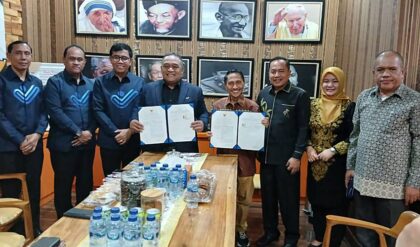
During a recent stakeholder engagement organised by the Nigerian Shippers’ Council (NSC) in Lagos, industry heavyweights voiced their deep concerns. Representatives from freight forwarding associations, truck owners, terminal operators, and importers collectively revealed that over 1,500 containers, valued in the billions of naira, are allegedly being held up by the police each month. These detentions, often based on vessel manifests, are cited as the primary driver of these substantial financial losses.
Experts emphasised that once cargo has undergone examination and received clearance from the Nigeria Customs Service and other relevant government agencies, subsequent interceptions represent a fundamental failure in process integrity and inter-agency coordination. This practice not only exposes importers to exorbitant demurrage and storage charges, leading to contract defaults, but also severely erodes international confidence in Nigeria’s port infrastructure and its reliability as a trading partner.
Parallel Authority and Lack of Sincerity
Industry leaders identified a pervasive issue of “parallel authority” and a “lack of sincerity of purpose” as the root causes of these persistent blockages. Mr. Babatunde Keshiro, General Manager of Port and Terminal Multiservices Limited (PTML), articulated this sentiment, stating that any concerns regarding cargoes should be addressed during the initial examination phase.
“Once the cargo has been cleared and exited the ports, there shouldn’t be any ploy to delay it. No letter, no sanction should arise after that,” Keshiro asserted. He drew attention to an Executive Order issued in 2022 that specifically directed an end to the practice of intercepting containers that had already been cleared and released.
Shipping Companies Under Scrutiny
Further compounding the issue, the Apapa Chapter Chairman of the Association of Nigerian Licensed Customs Agents, Emeka Chukwumalu, proposed that the Police should be held financially accountable for demurrage charges incurred when containers are blocked post-clearance.
In a related accusation, Abayomi Duyile, the PTML Chapter Chairman of the National Council of Managing Directors of Licensed Customs Agents, pointed the finger at shipping companies. He alleged that these companies are facilitating the problem by illicitly sharing cargo manifests with the Police, a practice he condemned as “illegal and contrary to international shipping standards.”
Other prominent figures, including Chief Remi Ogungbemi, President of the Association of Maritime Truck Owners, and representatives from joint freight forwarding associations, echoed these sentiments. They highlighted how post-clearance container blocking disrupts port operations and unfairly shifts the burden of inefficiencies onto port users.
The Shippers’ Council’s Role and Commitment
Dr. Pius Akutah, Executive Secretary and Chief Executive Officer of the Nigerian Shippers’ Council (NSC), the organiser of the engagement, reaffirmed the Council’s commitment to protecting cargo interests and ensuring port security.
“Our role is not to complicate your business or impose additional costs,” Dr. Akutah stated. “We work with the Police to secure cargoes, but we also intervene when stakeholders complain, and many such complaints are promptly resolved.”
Dr. Bashir Ambi, Head of the Complaints Unit at the NSC, shared the significant burden placed on his unit, admitting to “sleepless nights” due to the damage being inflicted on the nation’s reputation. He emphatically declared that the NSC’s Complaints Unit never has, and never will, charge for its services. Instead, he stressed their ongoing efforts to “confront” the Maritime Police regarding the issue of blocking cleared containers. He urged stakeholders to firmly resist paying unreceipted fees and to channel their grievances, along with concrete evidence, through the NSC for resolution.
Maritime Police’s Defence: National Security Imperative
In response to these widespread accusations, the Police Public Relations Officer of the Maritime Police Command, Assistant Superintendent of Police Adebayo Rasheed, defended the practice. He insisted that container blockages are “intelligence-driven” and cannot be halted due to overriding national security concerns.
Rasheed cited recent successful interceptions of arms and tramadol concealed within cleared containers as justification for their actions. He assured stakeholders that the Police would not compromise on security in the name of trade facilitation and encouraged those with evidence of extortion to report to the appropriate authorities. However, he concluded with a firm statement: “blocking of containers by the Police cannot be stopped.”